YDH Media
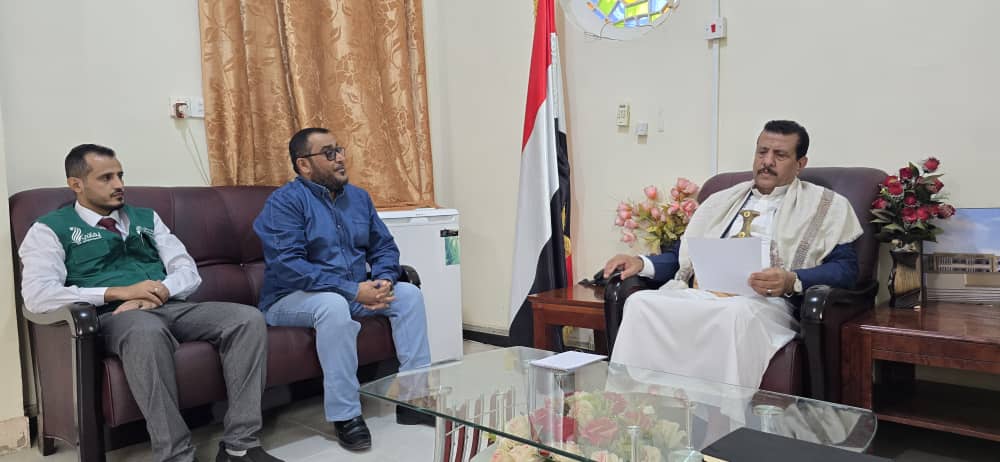
Dr. Abdulrab Muftah, Deputy Governor of Marib, met today with the team from King Salman Humanitarian Aid and Relief Center (KSrelief) in Marib and the Chief Executive Officer of Yamany Foundation to discuss the requirements for commencing the implementation of the Water Services Improvement Project at Marib General Hospital. The project, funded by KSrelief and implemented by Yamany Foundation for Development and Humanitarian Works, aims to provide safe and sustainable water for the hospital.
The meeting was attended by Mr. Ahmed Al-Akwa, Chief Executive Officer of Yamany Foundation, Dr. Anas Saif, Director of Programs and Projects, and KSrelief representatives in Marib Governorate, Dr. Lutfi Al-Abari and Ms. Radiyah Al-Najjar.
During the discussion, Deputy Governor Muftah was briefed on the progress made in the studies and designs for the project components, which include the rehabilitation of the existing well and its connection to a solar power system, drilling of a new 180-meter-deep well with a pump room and solar operating system, construction of a new elevated water tank with a capacity of 50 cubic meters, rehabilitation of the existing tank, and establishment of a Reverse Osmosis (RO) desalination plant with a production capacity of 20,000 liters per hour to ensure water quality and sustainability.
Dr. Muftah emphasized the importance of this project in supporting the healthcare services at Marib General Hospital by providing safe and clean water, benefiting more than 24,760 individuals, including medical staff, patients, employees, and hospital visitors.
He also commended the humanitarian role of King Salman Center in Marib Governorate and its funding of various sustainable and impactful projects implemented by Yamany Foundation, which serve the local community and strengthen institutional capacity in delivering services across health, education, water, and sanitation sectors — ultimately contributing to improving the quality of life for both displaced persons and host communities.